Ethereum Proposes Transition to Pure Cryptographic Model
Vitalik Buterin outlines a roadmap to replace traditional hard forks with recursive STARKs and formal verification.
Listen to this article
The 20-second version
- The 'Hegota' upgrade is positioned as the final conventional hard fork for the Ethereum network.
- Proposed architecture relies on recursive STARKs to create a 'cryptographic world computer.'
- Formal verification will be used to ensure protocol-wide security without manual intervention.
Why it matters
This shift would fundamentally change how the second-largest blockchain scales and evolves, moving away from human-coordinated upgrades toward a mathematically enforced execution environment.
The story
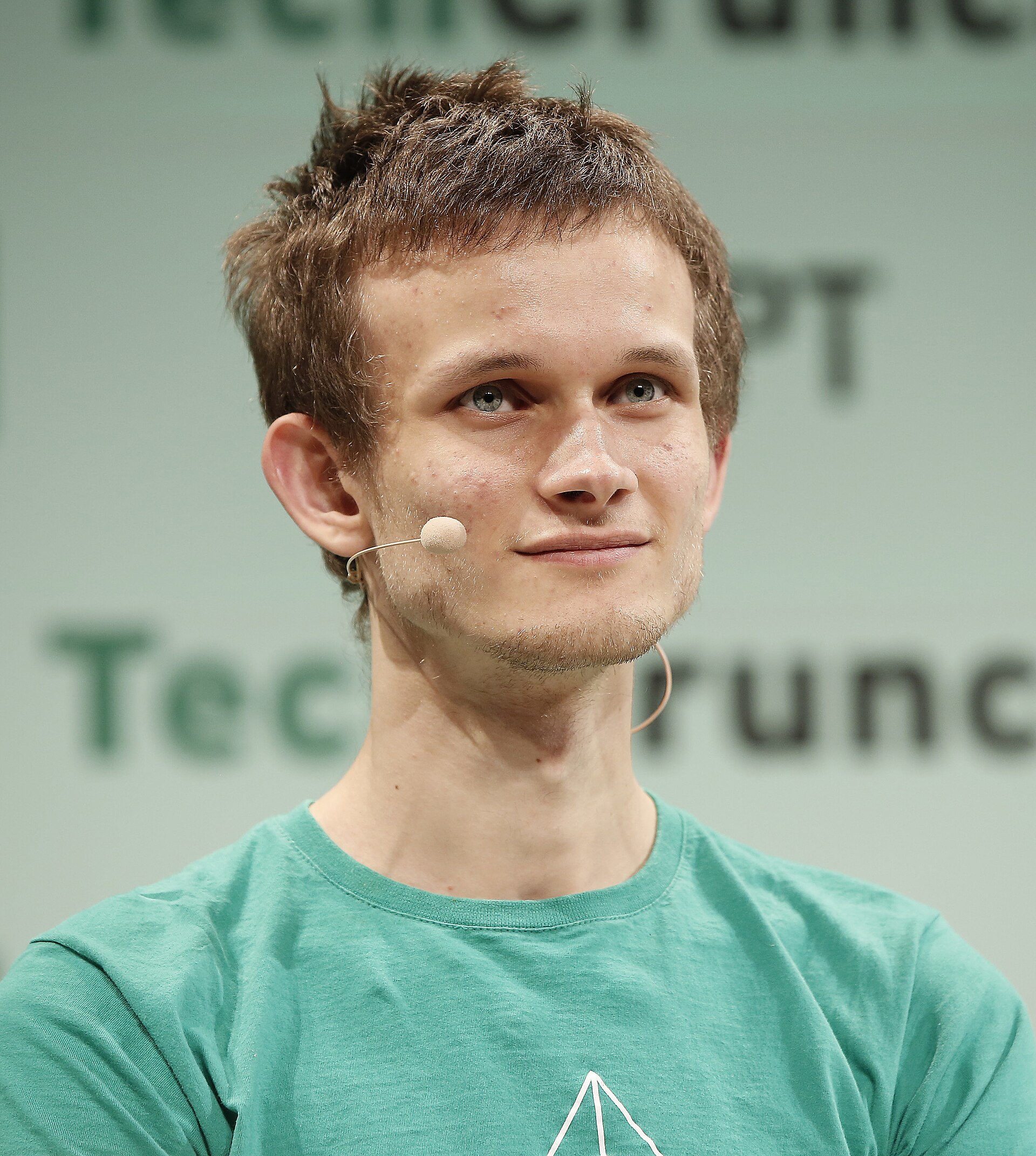
Ethereum co-founder Vitalik Buterin has introduced a long-term vision for the network that shifts away from standard software updates. The proposal identifies the upcoming 'Hegota' upgrade as the final iteration of Ethereum's current development cycle. Following this milestone, the network is intended to transition into what Buterin describes as a 'cryptographic world computer.'
The core of this transition relies on the implementation of recursive STARKs (Scalable Transparent Arguments of Knowledge). By utilizing these proofs, the network can verify complex computations through significantly smaller, aggregated proofs. This method aims to increase the efficiency of data processing while maintaining the decentralized nature of the ledger.
A significant component of the plan involves formal verification. This process uses mathematical proofs to confirm that the code underlying the protocol behaves exactly as intended. By integrating this into the core architecture, the developers aim to eliminate the vulnerabilities often introduced during manual software patches and coordinated hard forks.
This roadmap signals a departure from the iterative development style that has characterized Ethereum since its inception. Rather than relying on periodic community consensus for system-wide changes, the protocol would evolve through a fixed cryptographic framework that allows for internal optimization without breaking existing structures.
The move toward a purely cryptographic model is expected to reduce the social overhead required for network maintenance. If successful, the Ethereum Virtual Machine (EVM) would effectively become a self-sustaining mathematical entity, where every state transition is proven valid by default rather than by participant agreement.
$3/1M in · $15/1M out
$7,200
$87,600 a year at this volume
The other side
Critics argue that total reliance on formal verification and STARKs may introduce new points of failure if the underlying mathematical assumptions are compromised, and that removing the human element of forks could reduce the community's ability to respond to unforeseen social or political pressures.
What's next
The Hegota fork will serve as the immediate testing ground for these integrated proofs. Following its implementation, developers will begin deploying the recursive proof infrastructure necessary to finalize the transition to the new architecture.
Sources
Ethereum Proposes Transition to Pure Cryptographic Model
- • The 'Hegota' upgrade is positioned as the final conventional hard fork for the Ethereum network.
- • Proposed architecture relies on recursive STARKs to create a 'cryptographic world computer.'
- • Formal verification will be used to ensure protocol-wide security without manual intervention.
The Leverage Wire · www.theleveragewire.com/article/ethereum-proposes-transition-to-pure-cryptographic-model